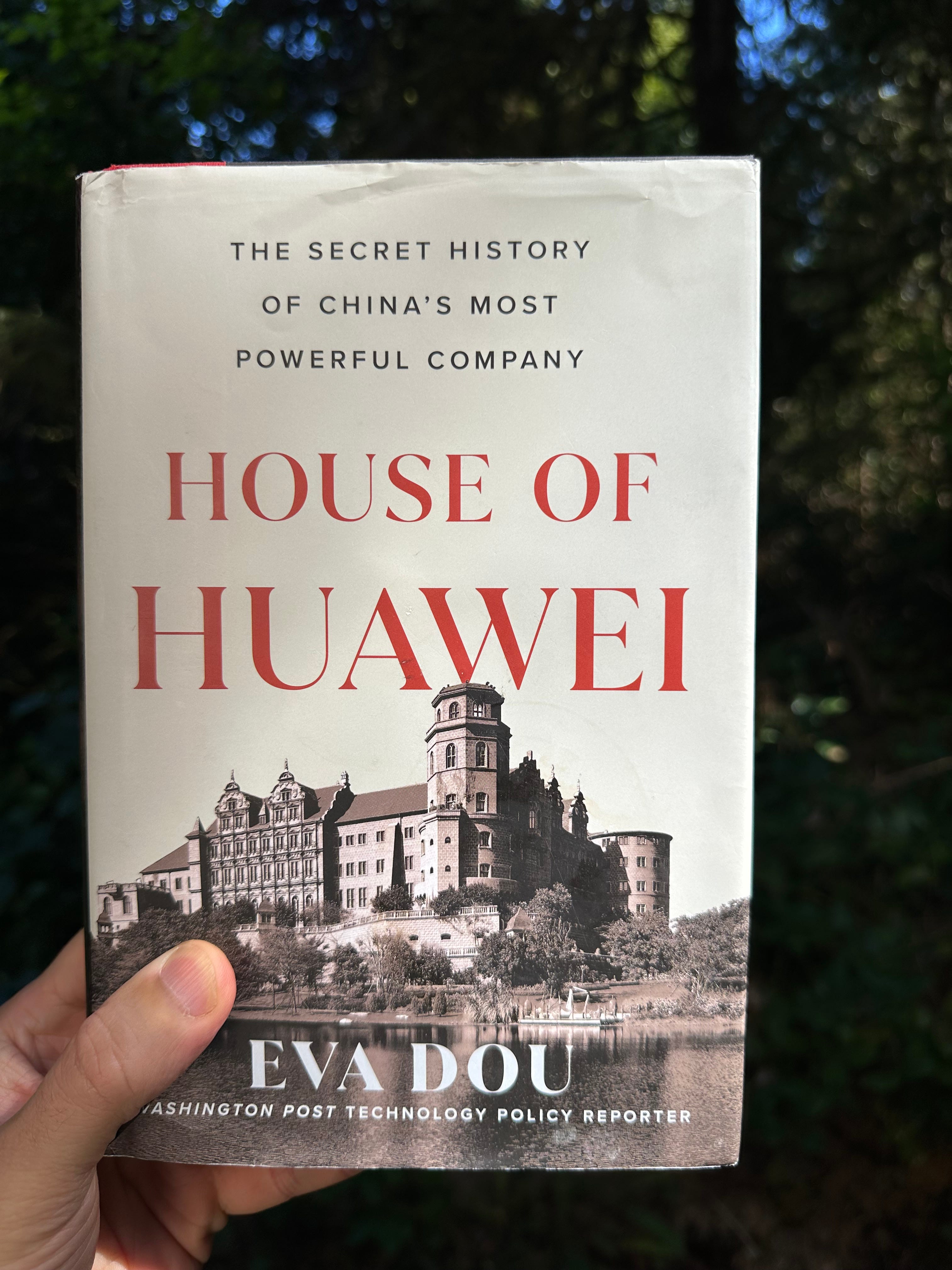
I just closed House of Huawei, I read it the same month I plodded through The NVIDIA Way, and House mops the floor with it. Where NVIDIA sticks to corporate-safe hero worship, House reads like someone who was in the room and cared deeply about portraying the real events as they unfolded. It’s still a business biography, sure, but every chapter carries grime under its nails.
The founder story
Ren Zhengfei’s life would sound contrived if it was a propaganda film. A PLA engineer gets downsized in the early-eighties defense draw-down, lands in boom-town Shenzhen with almost nothing, and starts flipping imported PBX switches out of a rented room. When the margins vanish, he reverse-engineers the gear, builds a knock-off that’s faster, and sells that instead. He loses his nest egg to a scam, divorces, moves back in with his parents, then claws his way to the first domestic 10 000-line switch in 1993. Less than four decades later the company is shipping under-sea cables, 5G gear, and notebooks. If Ren had scripted his odds in advance, nobody would have financed the film.
The resignation-letter ritual
One detail the book nails is Huawei’s quarterly “self-denunciation.” At the end of every quarter, branch managers hand in two sheets: a blunt self-critique of the numbers and a signed resignation letter. Most letters end up back in the out-tray with a note: “Try harder.” Imagine Salesforce telling account execs, “Nice try, but put your job on the line four times a year if you want that badge.” As management theatre it’s merciless; as culture-shaping it’s unforgettable. Read that passage and you finally understand why the staff carry a bunker mentality that still baffles Western HR departments.
Meng Wanzhou and the cost of that lay-over
Then came December 2018. Ren’s daughter and CFO, Meng Wanzhou, lands in Vancouver for a routine transfer, only to be arrested at Washington’s request. To most Canadians the case looked like a white-collar extradition story. Inside China it rang every nationalist alarm bell at once. Local media blasted it as a state-sanctioned abduction; WeChat feeds filled with “bring her home” banners; even normally apolitical engineers at rival firms reposted protest memes. Two Canadians vanished in what we politely call “reciprocal detention,” agriculture exports stalled, and a dozen university exchanges dissolved overnight. The United States later eased trade tensions with Beijing, but Ottawa—not Washington—carried the diplomatic bruises. Middle power, meet power politics.
The buried bombshell: Operation SHOTGIANT
While the Meng saga grabbed headlines, another Huawei story hit me even harder. The Snowden papers showed the NSA had hacked Huawei’s Shenzhen HQ years earlier, lifted source code, and wire-tapped senior execs under the codename SHOTGIANT. Its incredible; while American lawmakers were thundering that Huawei gear might contain back-doors, their own intelligence agency was inside Huawei’s backbone doing…the very thing they feared. If the roles had been reversed—say, PLA hackers roaming Cisco’s servers—Capitol Hill would still be holding hearings. Instead, the disclosure enjoyed a news cycle, then vanished into the swamp of “old controversies.”
“Crippled” isn’t how this ends
Sanctions were supposed to grind Huawei down: no Google services, no TSMC wafers, no ARM licenses, entity-list purgatory. Yet last year revenue rebounded and head-count grew. Profit dipped only because they doubled R&D spend to record levels. In other words, the embargo funded an internal Manhattan Project. Huawei poured billions into chip design, packaging tricks, and software work-arounds while outsiders wrote obituaries.
The history student in me kept thinking back to 1914, when the Allies blocked Germany’s nitrate imports. Conventional wisdom said no nitrates, no gunpowder. Haber and Bosch pulled ammonia straight out of thin air; Germany stayed in the fight and the world inherited both synthetic fertilizer and more lethal artillery. Denying a strategic input can starve an enemy, but not always.
From 910 B to 910 C—and whatever’s next
Fast-forward to this spring. Huawei starts mass-shipping the Ascend 910 C, effectively two 910 B dies lashed together in a monster multi-chip module. Benchmarks from local cloud providers peg it close to NVIDIA’s H100 on mainstream transformer jobs. Is it perfect? No. Yields on SMIC’s 7-nanometer line are still ugly, but for domestic workloads the chip is “good enough” and, more crucially, available to buy in China. The speed of iteration here feels more like a startup than a blacklisted conglomerate.
The electricity asymmetry nobody talks about
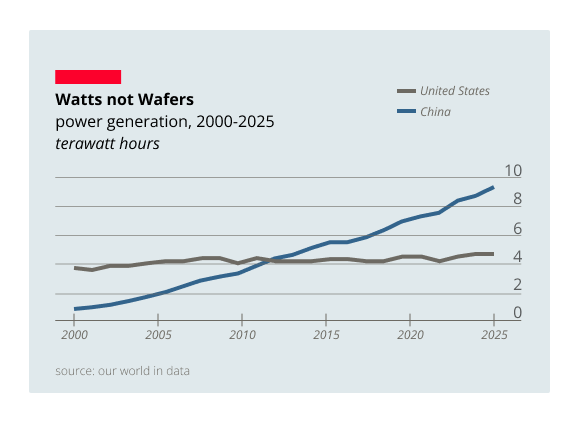
Silicon gets the press, but power may decide the race. Training GPT-class models now vacuums as much electricity as a small city. U.S. data-center builders are begging utilities for juice they don’t have. China, by contrast, sits on overbuilt coal and hydro capacity and retail power prices a fraction of Uncle Sam’s. Inside rural parts of China you’ll see purpose-built “computing hubs” rising next to dams and mine-mouth plants. Huawei’s cloud arm is perfectly positioned to turn that excess into AI tokens. When electricity is your cheapest input, you can brute-force design shortcomings. Shotgun, not precision rifle.
The unintended-consequence ledger
Stack the stories together and a pattern emerges: if you treat each piece as a discrete crisis, you miss the compounding effect. Pressure doesn’t just toughen Huawei; it hands the Chinese state a clear argument for self-reliance, then bankrolls the effort through state credit. Industrial excellence, executed at China-scale.
So, what does House of Huawei leave me with?
Mostly a reminder that resilience can look like chaos from the outside. Ren’s resignation-letter gimmick feels cruel until you see the results. The Meng drama feels like over-reaction until you count the industries on the verge of collapse if Huawei died. Sanctions feel decisive until the target publishes a new chip road-map six months later.
I finished the book convinced that the “crippling blows” we celebrate in policy papers have a nasty habit of turning into engineering milestones on the other side of the Pacific. You don’t have to like Huawei—or the state that shields it—to respect the organizational physics at work. Deny the ingredient, watch the workaround emerge, then brace for the consequences.
The next 12 months might be more about watts than wafers. Huawei has already shown it will squeeze performance from mediocre nodes by stacking dies, optimizing software, and planting data centres where electricity is cheapest. Multiply that across a grid still adding coal turbines and hydro dams, and the U.S. lead in usable compute starts to wobble.
If I were writing the epilogue, I’d frame it this way: the Great Chip Containment gambit risked creating the very competitor it feared. Just as the nitrate blockade mid-wifed modern explosives, the silicon blockade may be mid-wifing a power-rich, cost-tolerant AI complex in China—with Huawei at the switch. Whether that outcome was worth the diplomatic wreckage, only history will decide. For now, House of Huawei stands as a brisk lesson in how, as Sarah Paine would put it- “never put your enemy on death ground”.