
a summer abroad
Hour three of my return to the States; the notes folder on my phone is filled to the brim with ideas for pieces on my summer in Asia. As I sit at my desk in San Francisco, I start to scroll the list and I realize, devastatingly, that most of them cannot ever make it out into the world.
I think everyone who writes about China these days on Substack or elsewhere is confronted with a problem of audience. There has never been a time where good writing on China is more urgent; I truly believe that writers who understand deeply this country and can speak to the West in a compelling way are on a path to make a better world.
I’m surrounded by people who write exceedingly well on the subject of China, its culture, its technology, and its people. I’m incredibly thankful for people like Jasmine and Jordan and Nathan, who have been doing this in public and fearlessly for so many years.
My mind is bursting with ideas of what to write about China. Having spent weeks meeting labs across Haidian and Shanghai, I feel compelled to tell the stories of the people in those labs. How much I respect them, how hard they work, and how much they think about noble ideas around AGI, open source, and who owns the future.
And yet most of those ideas die on the vine, because each time I write them down I imagine partisans in both countries clipping some segment of the piece for points in a game I’m not playing.
walls around reasonable discourse
Our information environment today is full of pitfalls and traps. A swooning piece about Chinese AI research? Paid CCP shill. A skeptical piece about AI safety in China? Running dog for the American empire. A fun lighthearted piece about China’s daily life? Empty, boring, soft power manipulation.
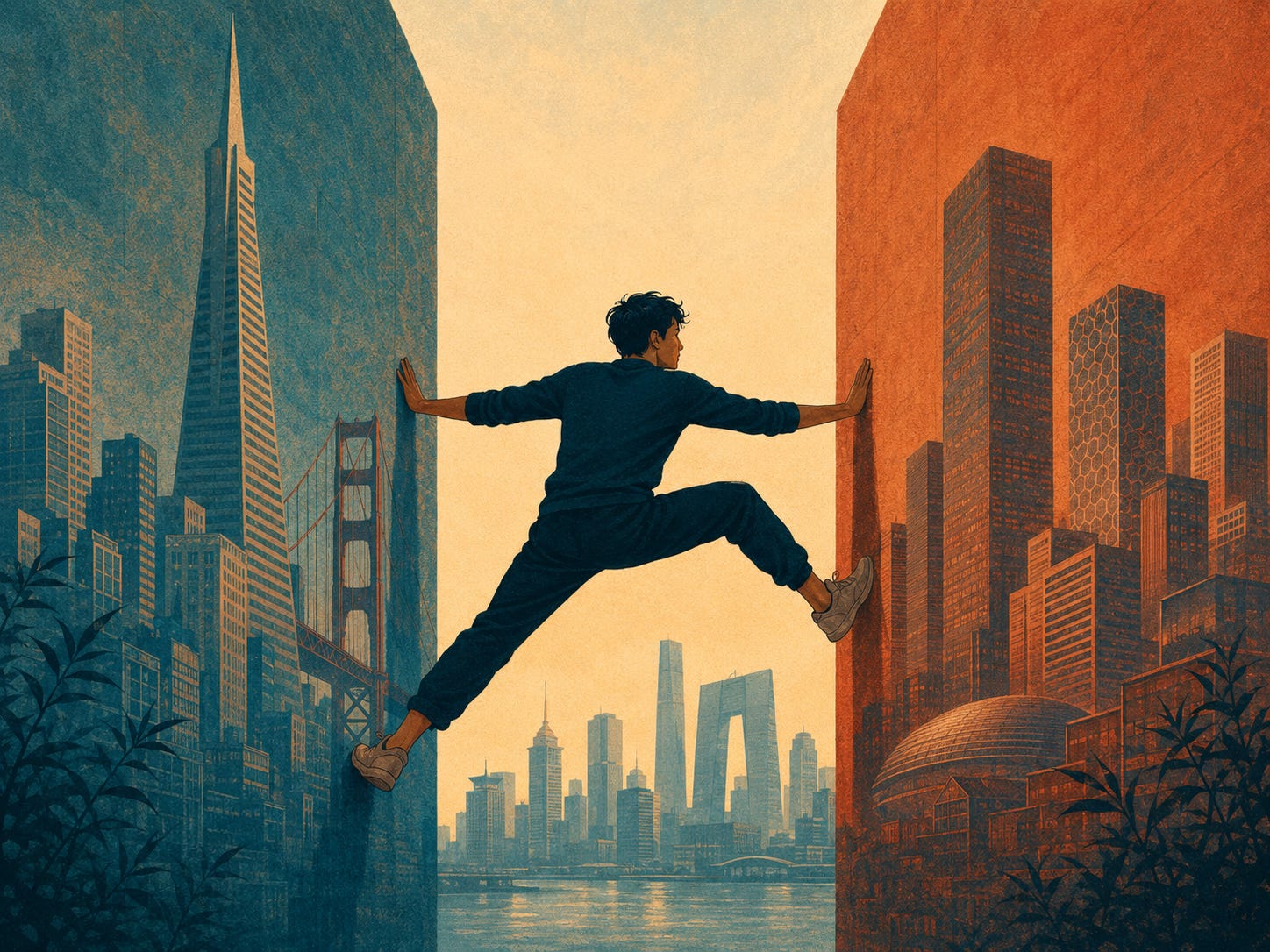
On both sides of my trip to China I stopped in Korea for a day or two for both conferences and meetings. As this was my first real visit to the country, I was struck by how easy it would be to write about. The internet is curious about Korea, excited about Korea, and deeply uncaring of the things that you can talk about when it comes to Korea. The country occupies a safe and neutral ground whereby anything can be done, written, or said. It’s so freeing coming from a place where the walls around reasonable discourse have closed in so tightly that writing something has to thread a needle between these two groups.
it wasn’t always this way
Nothing worse than middle-aged-male nostalgia, so I’ll keep this quick.
May 2014 Baidu Lab in Sunnyvale
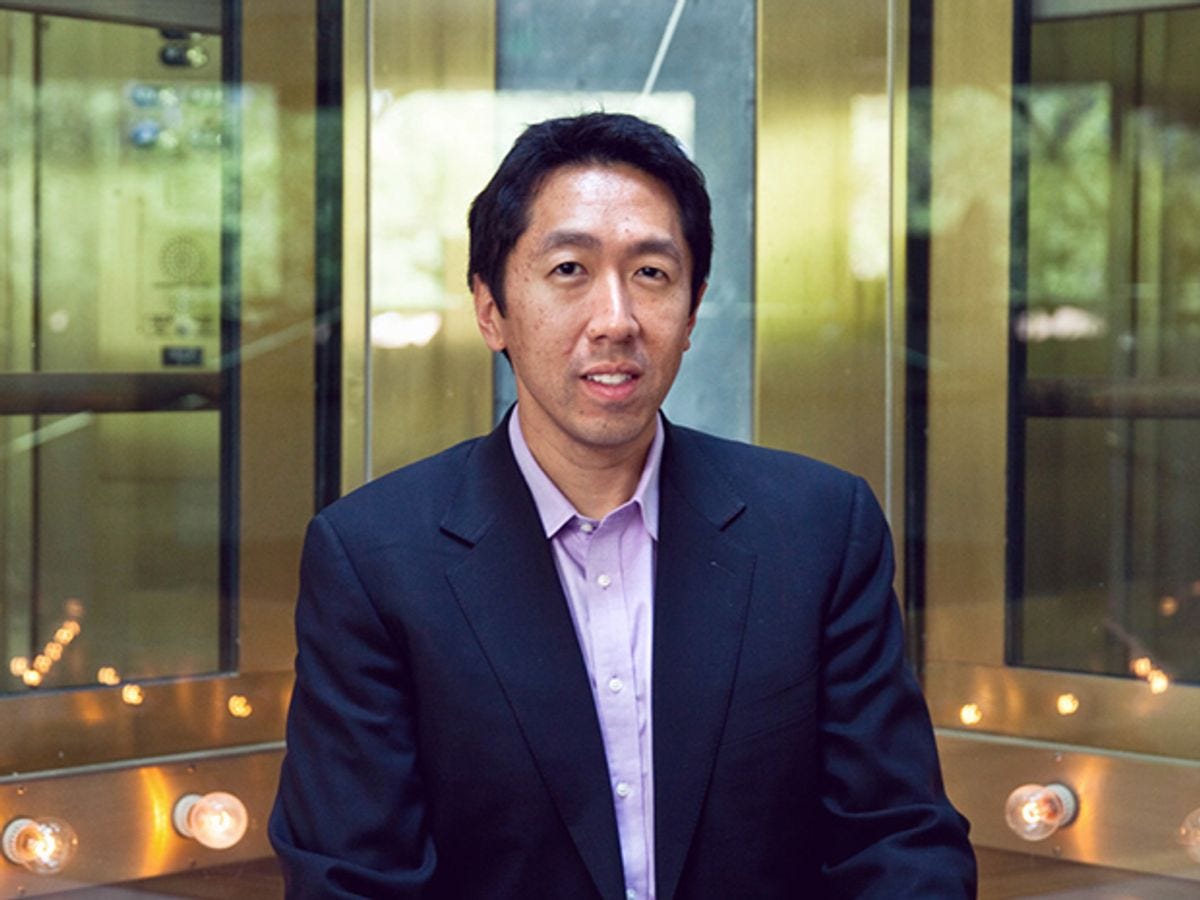
Andrew Ng, freshly hired as Baidu’s Chief Scientist, at the company’s new Sunnyvale research lab. Photo: IEEE Spectrum.
September 2015 Xi at Microsoft Redmond
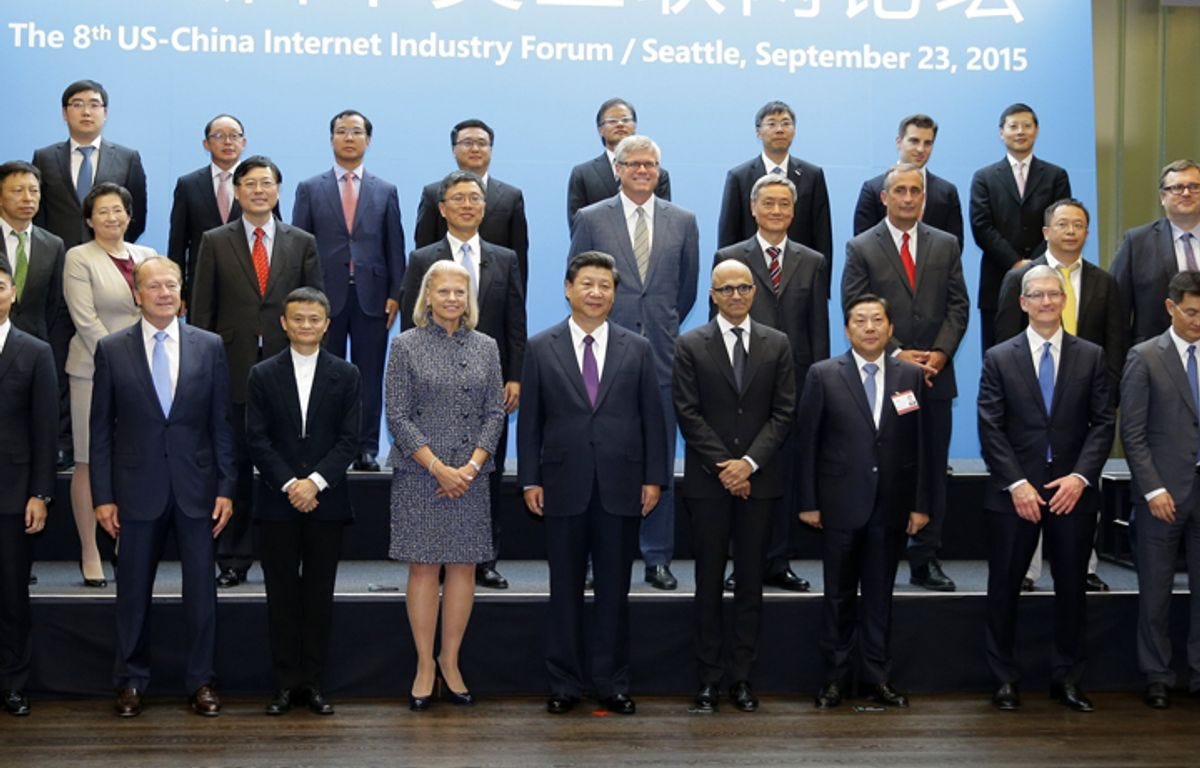
Xi Jinping with 29 American and Chinese tech executives, including Tim Cook, Satya Nadella, Jeff Bezos, Mark Zuckerberg, and Jack Ma, at Microsoft’s campus, September 23, 2015. Photo: The Seattle Times.
December 2017 Google Research Beijing
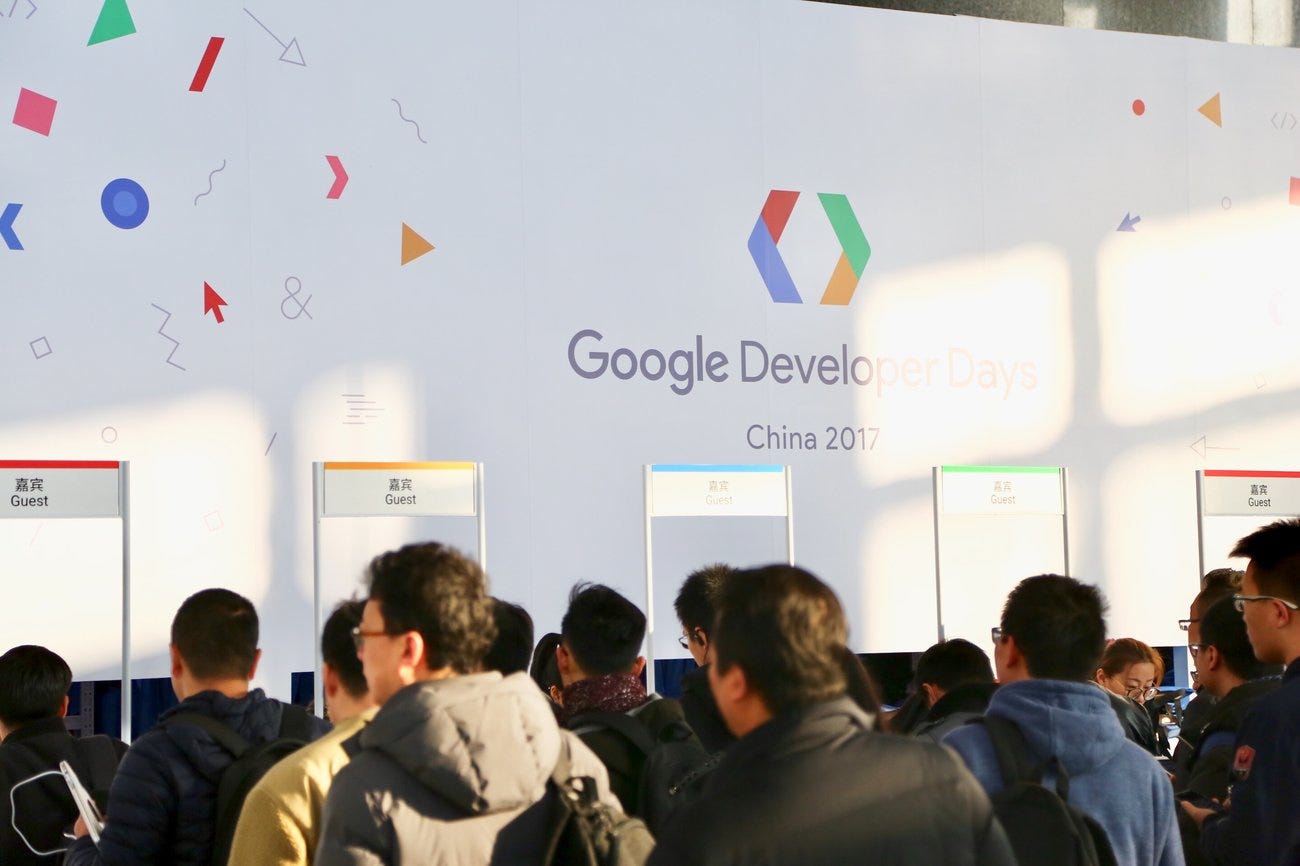
Google Developer Days China, Shanghai, December 2017, where Fei-Fei Li announced the Google AI China Center. Photo: Google.
Until very recently the science and technology ecosystems of these two great countries were intertwined, but all of these feel impossible today. I’m not making a point to say that these were the good old days; only that the phenomenon of deep technological partisanship is new.
wall dancing
While I was in China I read The Wall Dancers, which I unhesitatingly recommend to anybody who is interested in knowing China better. The book details the human stories of how the Chinese Internet has bloomed in the last couple decades and the way that the billion online Chinese live gracefully and artfully within the constraints of their system. Reading it inside of China was a beautiful experience because each and every day you meet Wall Dancers. As you spend more time in the country, you come to realize that you too must wall dance, not only for the Chinese but also for the American audience.
So what is to be done? Is this a moment for power plays instead of mutual understanding? Should I set aside the empathy that I feel and write for one side of this partisan audience or the other in order to avoid having to make these tough calls?
I’ve decided, in my own way, to continue to wall dance for now. Perhaps that will change in the future, but in the next six months here are the projects that I plan to continue doing that I believe satisfy the requirements of both of these camps while elevating the discourse in my own small way.
four China projects
Pacific Compute
PacCompute is a safety-only compute cluster for open model labs on both sides of the Pacific. There are several posts on this blog about Pacific Compute and I’ll leave you to read them if you’re interested. I advanced the project significantly on this trip and I’m very confident that it will lead to better and safer outcomes for open source models releasing in the next 12 months.
Ethics & Philosophy in Chinese AI
Earlier this year I wrote a piece about searching for Amanda Askell in Chinese labs. I’m pleased to report that on my last trip I have successfully identified many potential candidates, and I intend to interview them for a series on China’s AI ethics, character training, and the philosophy of model creation. I’m struggling a little bit with access to people doing these jobs in labs. I have found a pleasing number of folks in academia, third-party companies, and other locations that can kick off the series. I plan on working my way up to people that are doing this inside of the labs themselves.
Long-Form Open-Source Interviews
One of the things I find most compelling about this moment is the relationship between open source and China. Talking to folks who make open-source software and AI across the country has made me realize that the motivations people have to contribute to open source and to make open models vary wildly project to project. I’m going to spend some time doing interviews with folks in the Chinese open source ecosystem and then accompany them with some portrait photography and publish them, possibly as a book, possibly as long form on Substack.
the life of Liang Sicheng
A highlight of my trip this summer to China was a journey along the path that Liang Sicheng took to Shanxi in the thirties to rediscover Foguang Temple. Having spent some time studying Tang Dynasty temples, I’ve become obsessed with his journey to rediscover them, and how his life traces a beautiful path through the last century of China.
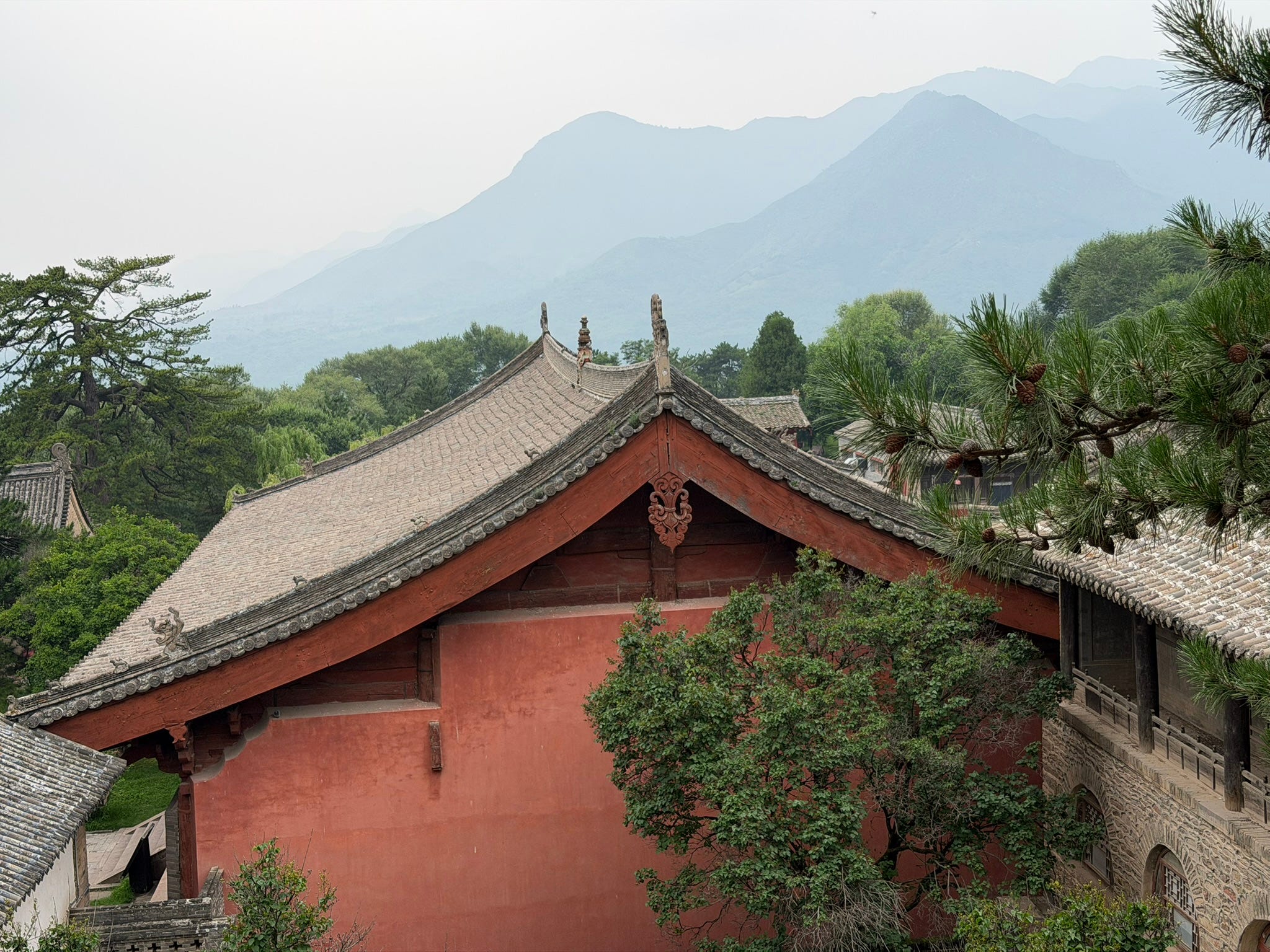
My side project this summer in Beijing was to accumulate books and anecdotes about him; I also had the opportunity to meet his family. I see his life as a Chinese parallel to J. Robert Oppenheimer, one of my heroes for over 15 years.
I’d like to tell the story of that life to an audience that’s maybe never heard of him or his work. This project will be a gentle, non-technical exploration of one of the great scholars of the last century of Chinese culture.
cautiously forwards
Together these four projects represent, to me, compelling wall dancing activities that will enhance the discourse around China in the West. Each of them relies upon trust and access while dodging the toxic political poles.
I hope you’ll stick with me through this journey and I look forward to writing for this burgeoning audience. As always I write this as a true old-school blog, a little unvarnished and a little rough- I appreciate all of your comments, questions, and emails.
Super excited for all the projects! On the "unvarnished" part, Nadezhda Mandelstam would have thoughts: "In our country the real masters are the philistines."
great power vortex dilemma is real